Visitors sign in at the door. Nobody reads the names of the others.
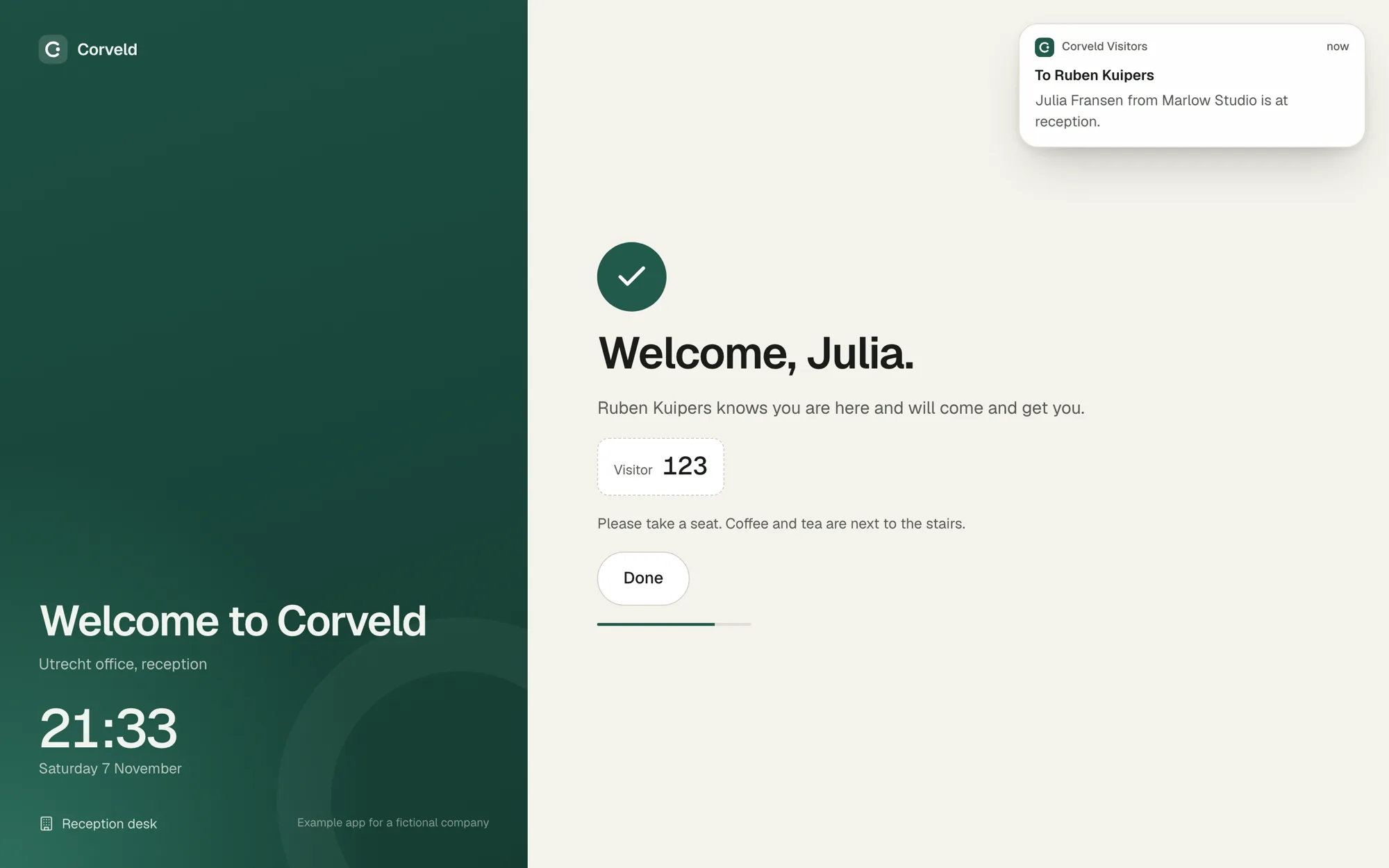
A tablet by the door replaces the paper visitor book. Visitors sign in with a few taps or the QR code from their invitation, the host gets a message, and the details delete themselves after a set term. An example, built for a fictional engineering office called Corveld.
The paper visitor book lay open for everyone to read.
Name, company, who they came for, time in and time out. Every visitor could read every line above their own, and the old books stayed in a drawer for years.
And when the fire alarm went, nobody knew for sure who was still inside.
Built from their chat.
An app with its own database, built from a chat.
- A tablet screen by the doorName, company and who you are here for, in a few taps. With an invitation, the visitor holds up the QR code from the email.
- A message to the hostThe moment the visitor signs in, the host gets the name and the company.
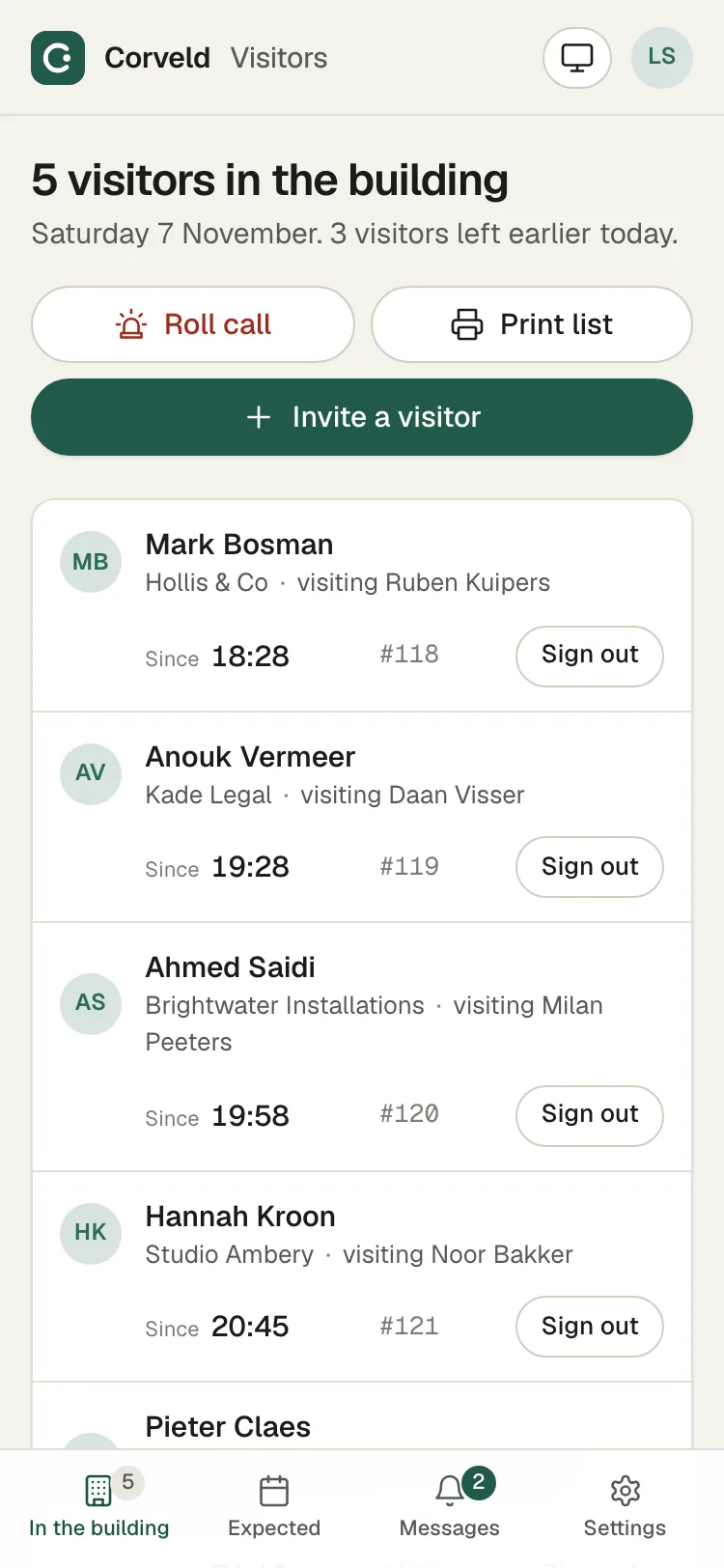
- Who is in the buildingOne list for reception, with a roll call for the assembly point and a list to print.
- Details that delete themselvesAfter the term the office chooses, name, company and times are gone. Only the count stays.
How the team uses it now.
- Visitors sign themselves in.Nobody hands out a pen, and nobody sees who came before them.
- The host knows before the visitor sits down.With the name and the company, the moment they sign in.
- At the alarm, reception opens one list.Everyone still in the building, ticked off one by one at the assembly point.
The build, in short.
- deploy_appThe tablet screen, the reception view and the server code on /api, with its own database and sign-in for staff.
- apply_app_migrationThe tables for hosts, visits and messages, with example visitors.
- A scheduleEvery night it deletes the visitor details that are past the chosen term.
The gap between the AI and the floor.
The model is not the hard part. The hard part is getting it into the way a team already works: their mail, their systems, their approvals. That is the work of a forward deployed engineer, and Hypamoon is where the tool runs the same morning.
More tools a team runs on.
- Ardlow FreightA phone agent for drivers, and answers in the planners' own chat.→
- NorthdockOne live map of the hub, for the office and the floor.→
- Supplier inboxSupplier email, read and ready to approve.→
- Halden Road job boardA job board the team uses from their own chat.→
- CRM adapterThe chat works with the CRM, without ever holding the key.→
- Corveld who's inEveryone sets their week in a tap. Desks and parking add up.→
- Corveld bookingsThe pool car, the van and the meeting room, never booked twice.→
- Vosmeer gift drawNames drawn for Sinterklaas or Secret Santa, and nobody peeks.→
- Vosmeer leave plannerDays off asked, approved in one tap, and nobody short-staffed.→
- Vosmeer lunch ordersEveryone picks their own lunch. Each supplier gets one order.→
What would your team run on it?
Connect your chat and build the first tool. Or talk to us about yours.
Works in Claude, ChatGPT and Copilot. Add to Claude Add to ChatGPT  Add to Copilot