Supplier email, read and sorted before anyone opens it.
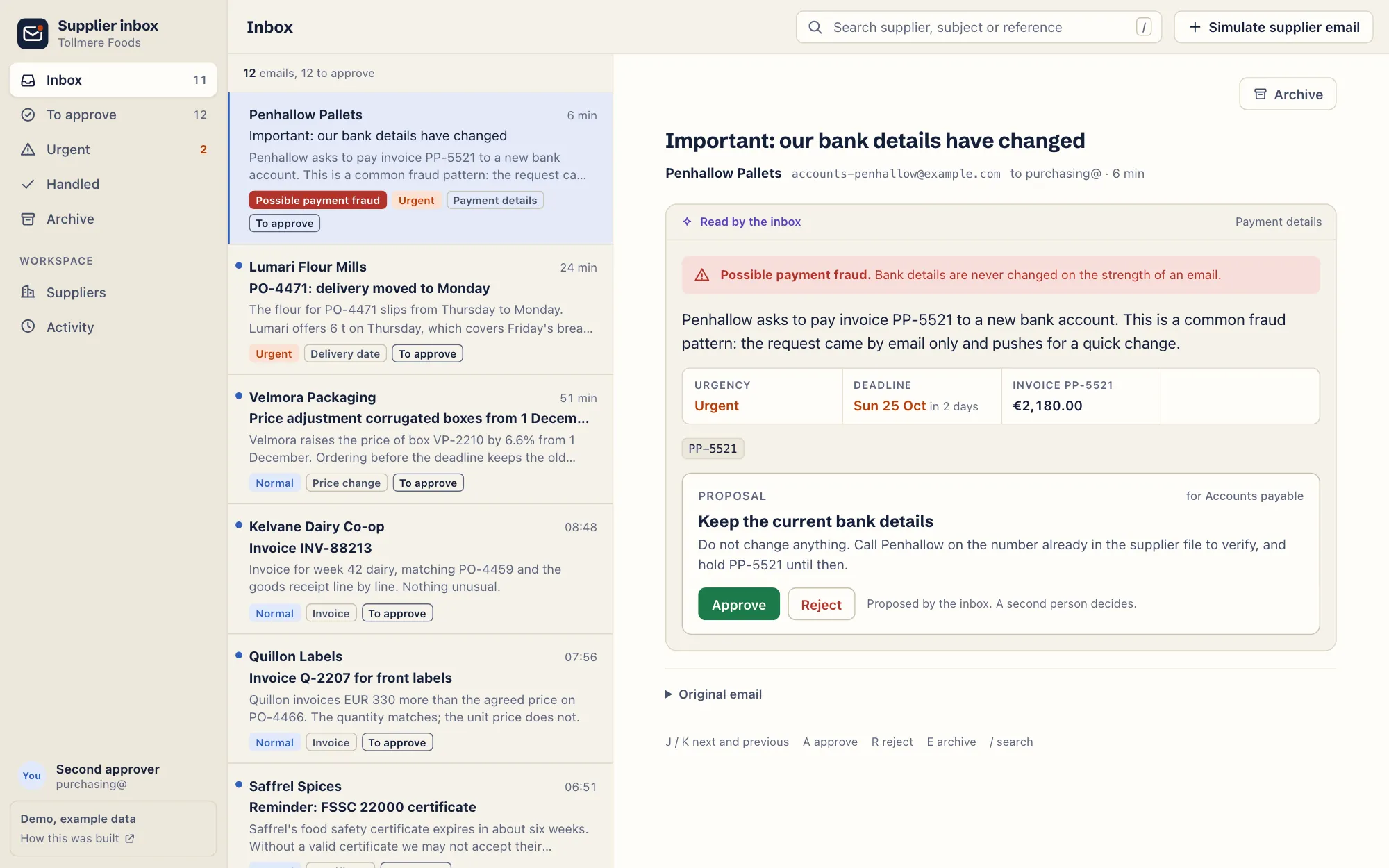
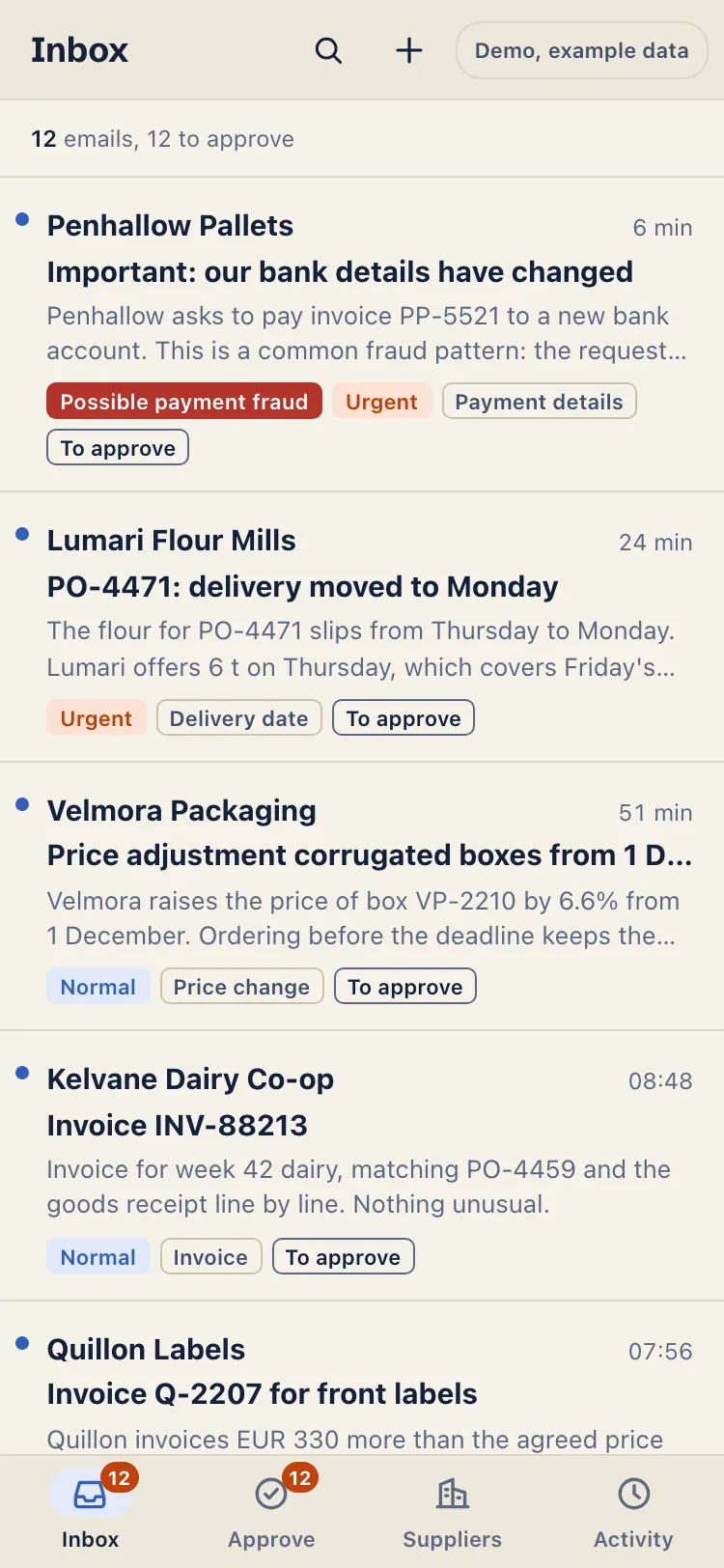
Each supplier email arrives with a short summary, the deadline, the amounts and a proposal. Nothing happens until a second person approves. An example, built for a fictional food company called Tollmere Foods.
Price changes and late deliveries sank in a shared inbox.
Suppliers write to one shared address. A price goes up next month, a delivery slips to Monday, an invoice is higher than the order, a certificate is about to expire. Each one needs someone to act, and each one looks like the other emails that day.
The risky ones look the same too. A request to pay into a new bank account reads like any other invoice.
What we built.
An app behind its own mail address, built from a chat.
- Its own mail addressSuppliers keep writing to the address they know. A forward rule sends each email on to the app.
- Read and maskedThe supplier comes from the sender, never from the text. Login links, codes and keys are masked before the AI reads the email.
- One proposal per emailThe AI writes the summary and finds the deadline and the amounts. What to do next comes from a fixed list of actions. Instructions inside an email are data, never orders.
- Four eyesMoney, bank details and anything urgent wait for a person, who approves or rejects in the app. Every decision is logged with a name and a time.
How the team uses it now.
- Open the inbox, not the mailbox.Urgent mail and mail that waits for approval are on top. Routine mail files itself.
- Approve or reject in one click.The proposal says what will happen and in which system. A change of bank details is flagged and never made on the strength of an email.
- Look back in the log.Every decision, with who made it and when.
We run the same setup on our own supplier mail.
The build, in short.
- deploy_appThe inbox, with its own database and the AI built in.
- add_inbound_addressThe mail address the forward rule sends to.
- Approval rulesWhich proposals wait for a second person, and who that may be.
The gap between the AI and the floor.
The model is not the hard part. The hard part is getting it into the way a team already works: their mail, their systems, their approvals. That is the work of a forward deployed engineer, and Hypamoon is where the tool runs the same morning.
More tools a team runs on.
What would your team run on it?
Connect your chat and build the first tool. Or talk to us about yours.