The drivers' line answers itself. Planning gets its morning back.
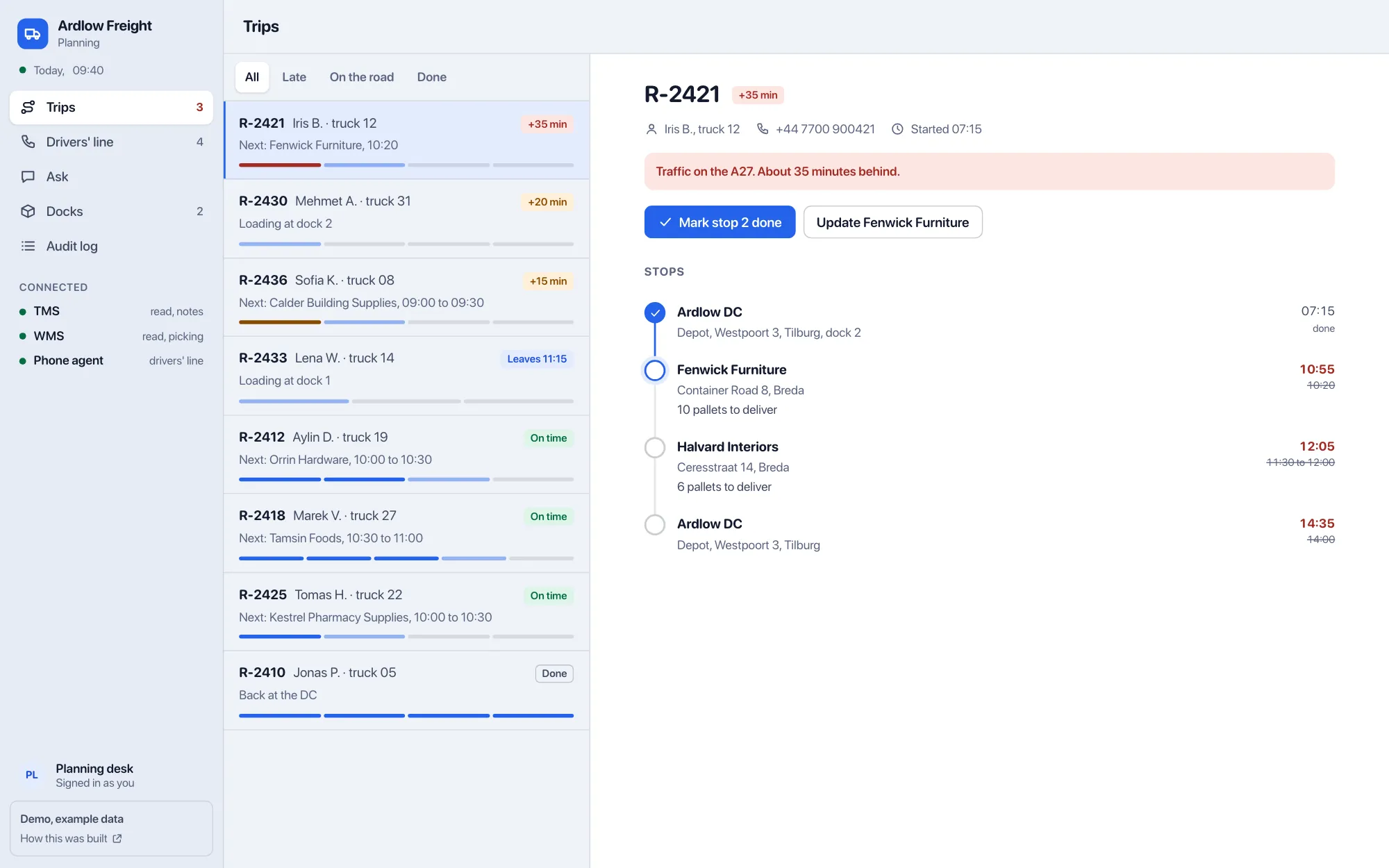
A carrier with about 200 people, a TMS, a WMS and a phone system. In one day an engineer connected the TMS and WMS and put a phone agent on the drivers' line. An example, built for a fictional carrier called Ardlow Freight.
Every morning the planning desk was on the phone.
Drivers start before planning does, and the first question is always the same: where do I need to be? Then: which dock, and is there anything to pick up.
The answer is in the TMS and the WMS, two screens a driver never sees. So a planner reads it out, call after call.
What we built.
Adapters for the systems they already had, and a phone agent on the line drivers already call. Built in one day from the engineer's chat.
- A TMS adapterTrips, drivers, stops and times, read only. The key sits in the vault, and the IT lead allowed the access rule with one click.
- A WMS adapterShipments, pallets and dock slots, so one answer can combine where a truck is with what waits for it.
- A phone agentIt knows the driver by the number, looks up today's trip and reads out the next stop. When something does not add up, it puts the call through to planning.
- The planners' own chatPlanners add the connection to Claude or ChatGPT and ask which trips are running late. Every answer shows where it came from.
How the team uses it now.
- Drivers call the number they always call.The agent answers, also before seven. A number that is not on today's plan goes to planning.
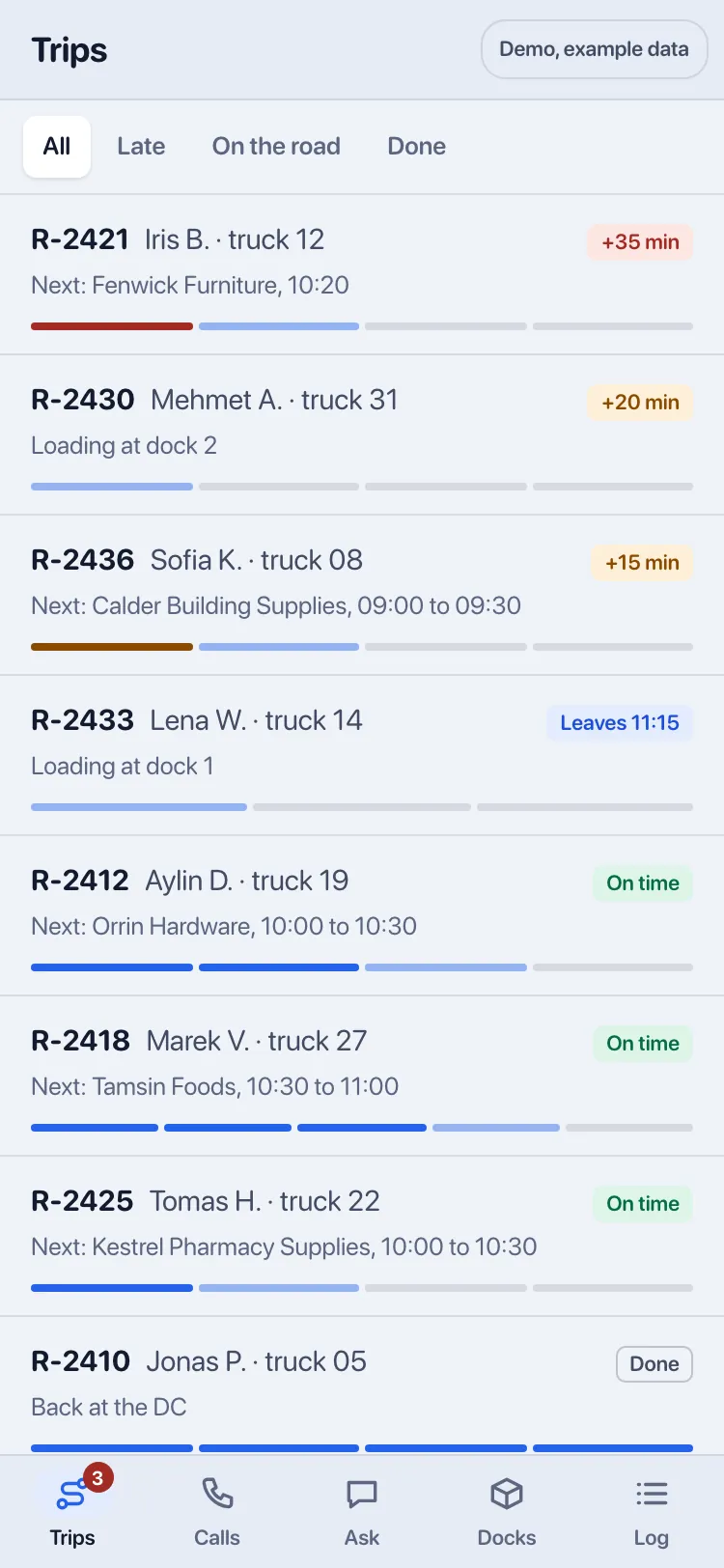
- Planners ask in their own chat.Which trips are late, what is still on dock 2, where truck 27 is.
- The customer portal was never touched.Nothing was replaced, and nobody needed training.
The build, in short.
- write_adapterAn adapter for the TMS and one for the WMS, from their API docs.
- request_secretThe keys go into the vault. The chat never sees them.
- grant_adapter_accessRead-only rules, allowed by the owner in the portal.
- set_assistantThe phone agent, with its instructions and a handover to planning.
The gap between the AI and the floor.
The model is not the hard part. The hard part is getting it into the way a team already works: their mail, their systems, their approvals. That is the work of a forward deployed engineer, and Hypamoon is where the tool runs the same morning.
What would your team run on it?
Connect your chat and build the first tool. Or talk to us about yours.