The chat works with the CRM. Nobody hands it the key.
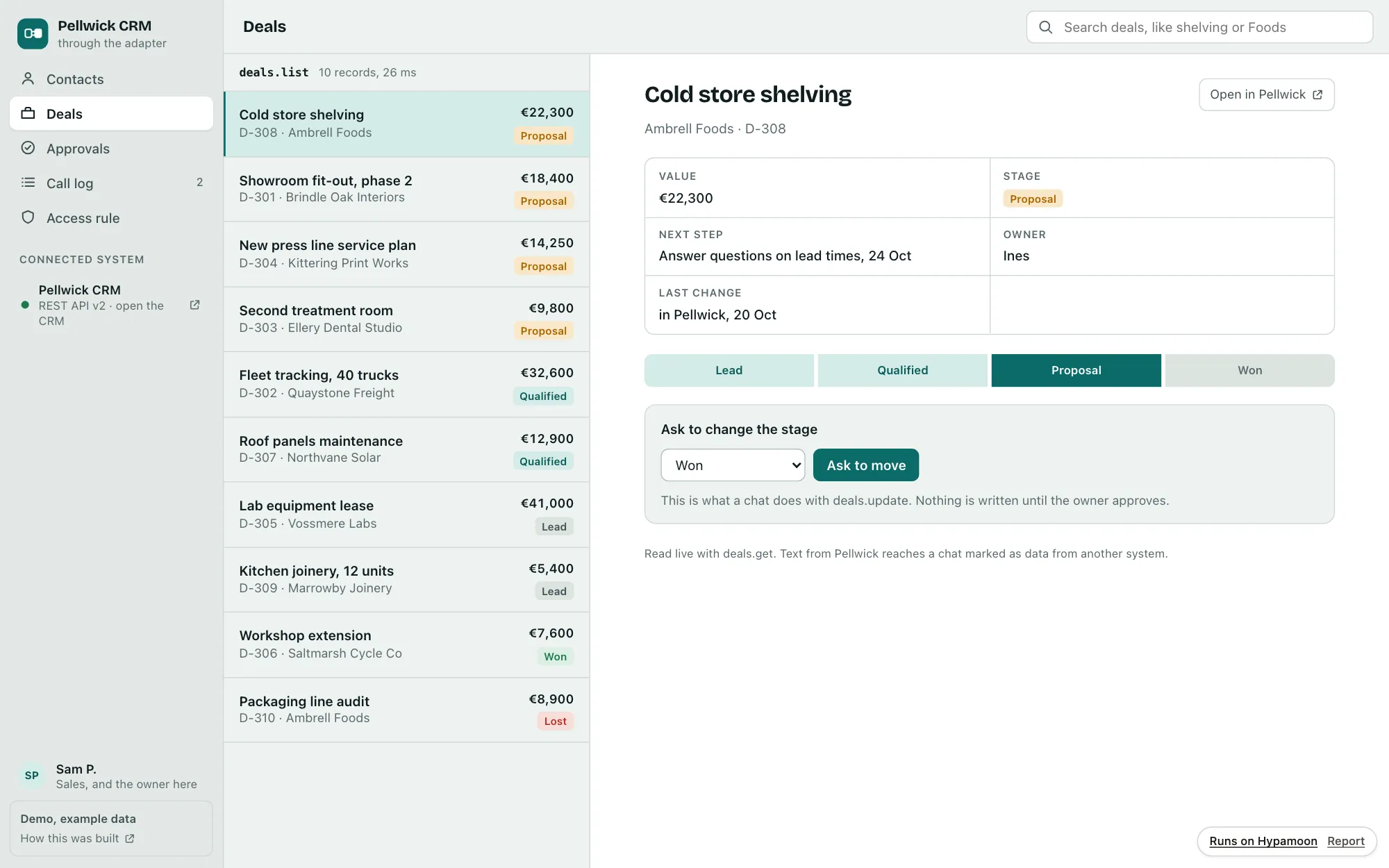
An adapter the chat wrote from the CRM's API docs. The key stays in the vault, phone numbers never arrive, and a change to a deal waits for the owner. An example, built on a fictional CRM called Pellwick.
Sales wanted the chat to use the CRM. Nobody would hand it the API key.
The CRM holds every contact and every deal. Giving a chat the API key means giving it everything: every field and every write, with nothing in between.
So it stayed copy and paste, from one screen to the other.
What we built.
An adapter the chat wrote from the CRM's API docs, run by Hypamoon.
- Written by the chatContacts and deals, with list, get, search and update. One small handler per action.
- The key in the vaultThe adapter names the key in a header and Hypamoon adds the value on the way out. The chat never sees it.
- Only the CRM's own hostAny other address is blocked before the request leaves.
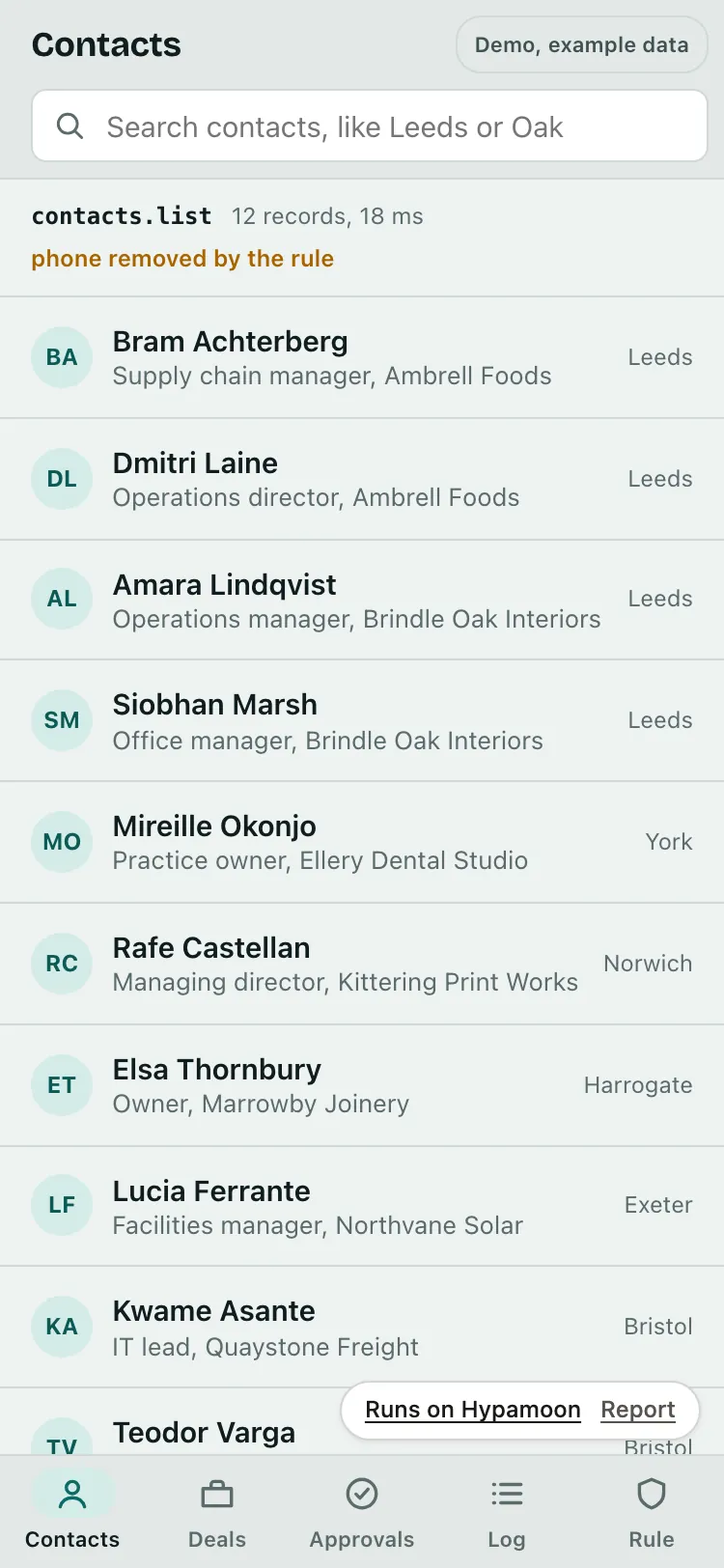
- A rule the owner allowsContacts without the phone field, deals to read, and every change waits for approval.
How the team uses it now.
- Read contacts and deals in the chat.Live from the CRM, with the phone numbers removed by the rule.
- Ask to move a deal.The request waits with the owner, not in the chat.
- Approve, and it is written once.Exactly that one call goes to the CRM, and it lands in the log.
The build, in short.
- deploy_appThe adapter: resources, fields, filters and actions.
- request_secretThe owner pastes the CRM key once, at a link.
- grant_adapter_accessThe rule in one sentence. A proposal until the owner allows it.
- Allow, in the portalOnly a person can click it, and revoking is one click.
The gap between the AI and the floor.
The model is not the hard part. The hard part is getting it into the way a team already works: their mail, their systems, their approvals. That is the work of a forward deployed engineer, and Hypamoon is where the tool runs the same morning.
What would your team run on it?
Connect your chat and build the first tool. Or talk to us about yours.